Manual vs Automated Material Handling Systems: Which is Better?

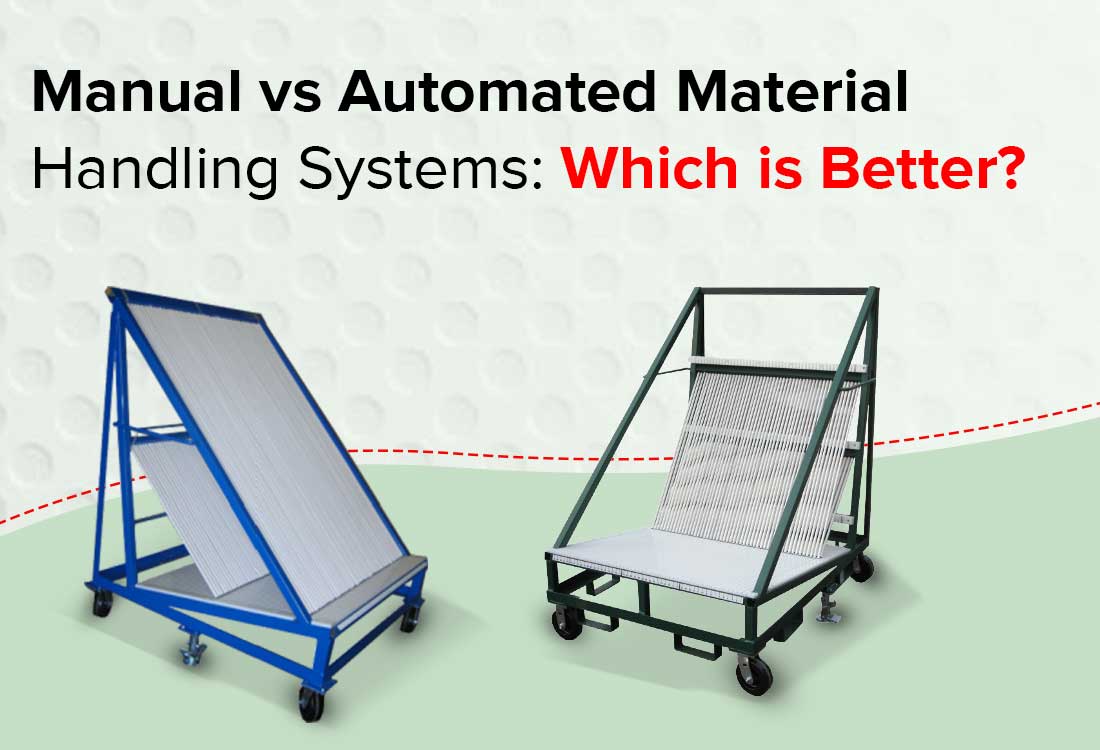
Material handling is a process that involves storing, packing, and moving goods and products over a short distance or in a restricted space like a warehouse or a manufacturing plant.
Over the last few years, there has been a debate between manual and automated material handling systems, which is getting more and more important. Businesses across various industries face pressure with respect to reduced downtime, productivity, and lower operational costs.
If you’re confused between manual and automated material handling systems, we’ve compiled some insights that will help you understand the difference between these two systems.
What is Manual Material Handling?
This process involves the use of physical force to lift, retrieve, and store goods and products. Usually, organizations have to rely on human and animal labour to handle things manually. Lifting, lowering, pushing, pulling, carrying, holding, or restraining are the activities related to manual handling
What is Automated Material Handling?
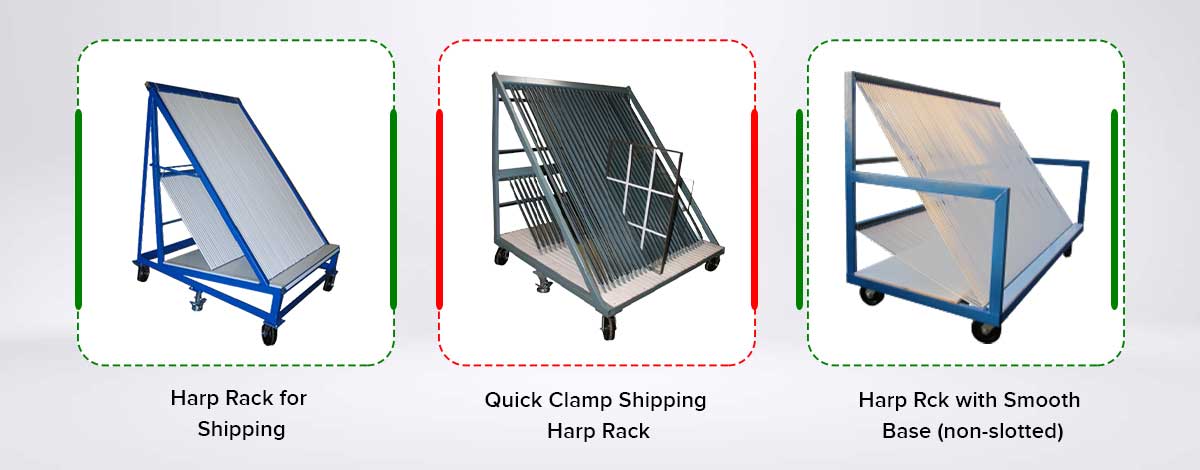
Automated material handling involves usage of robots and other computerized devices for moving, lifting, pushing, pulling, carrying, holding, and retrieving goods and products. This process involves either one mechanical equipment or a set of different tools like check-in tools, sorters, conveyors, stackers, unloading machines, totes, bins, trolleys, and tote carriers.
What Separates These Processes Apart?
Manual Material Handling
It is one of the most conventional strategies for handling materials where operators move around the building or warehouse to locate, retrieve, and store goods and materials. However, it does involve the use of powered machines like forklifts and small overhead cranes.
This process has slower speed as compared to the automated process. It also lacks scalability and agility, as you can’t program a manual system to handle more than a single operation. The manual system may result in inaccuracies and errors as it relies only on human labour.
Manual material handling requires minimal investment costs. However, you’ll need to invest in training new employees. You will also need to pay for increased labour costs.
This system can offer a relatively quick return on your investment due to lower initial investment. It makes the manual material handling system quite popular among small and medium-scale enterprises.
However, it may not offer higher productivity thanks to its error-prone management and other order fulfillment process. It also consumes a lot of time. This system is more suitable for operations that are less predictable or repetitive.
Notably, people involved in the manual material handling system are prone to injuries and even death due to improper handling of heavy loads. Such concerns make this system unpopular among businesses.
Automated Equipment Handling
Automated systems use advanced technology to build computerized systems that need zero manual interference for locating, moving, retrieving, and storing goods and products. Although the process is entirely automated, it may involve manual handling like lifting, pushing, picking, and dropping.
These systems are faster, more agile, and easily scalable. You can adopt such a system to conduct more than one task with careful planning and research. You can even scale it down in real time.
Automated systems offer advanced levels of precision, ensuring zero inaccuracies. They require a substantial initial investment and the cost may go up further if you’re planning to set up a personalized system. However, this kind of system will save money on manual labour.
It even increases productivity to a greater level as it relies on computerized machines instead of human labour. You can also personalize the output according to the market demand.
An automated system can be helpful in optimizing the warehouse and storage space as they allow you to utilize the vertical setting clearances. It is suitable for repetitive or predictable order fulfillment processes.
Such processes require operators with advanced technical skills. These operators are also required to undergo the necessary training to operate the lifting and handling equipment.
Automated material handling systems carry less chances of accidents and injuries due to improper handling. They rely on computerized retrieval and storage systems, along with various other equipment.
Which One Suits Your Needs?
Both material handling systems offer direct advantages but also come with demerits. While choosing between both these systems, you need to consider your budget and volume of your present and future requirements for handling materials.
If you have low volume and are unlikely to change at a significant rate in the current years, it will be unnecessary to invest a large amount of capital into the automatic system.
However, if you want to increase automation, try it on a smaller scale. For instance, you can make little changes to your current manual handling system and introduce a few engineered systems into your assembly line.
To Summarize
Automation has been on the rise in the material handling industry, many companies are still using the traditional manual methods. However, there are various warehouses and manufacturers who have found the right balance between automated and manual systems as the right solution for their organization.
If you need any help while choosing between these two systems, Kear Fabrication Inc. is here to help you out. Consult our team now and get the right guidance for your project.
Frequently Asked Questions
What’s the main difference between manual and automated material handling?
Manual relies on human effort, whereas automation uses machines and systems to move materials.
Which is more cost-effective: manual or automated handling?
Manual is cheaper upfront, but automation often saves more time.
Is automation suitable for smaller businesses?
Automation is suitable for smaller businesses only when the volume justifies the investments and long-term savings.